

What Causes Green Water in a Pond?
Green water is one of the most common signs pond owners notice when water conditions begin to change. The color may range from light green…
Green water is one of the most common signs pond owners notice when water conditions begin to change. The color may range from light green to dark green, and it can appear gradually or develop quickly.
But what actually causes a pond to turn green?
What Causes Green Water?
Green water is commonly associated with increased biological activity in the water column. Several conditions can contribute, including:
Excess available nutrients
Warm water temperatures
Increased sunlight
Limited water movement
Nutrient-rich runoff
Decomposing organic material
Phosphorus and nitrogen are particularly important because they serve as nutrients for aquatic growth.
Is Green Water Always Caused by Algae?
Not necessarily.
Green coloration can result from different types of suspended biological material, and appearance alone cannot determine the exact cause. Water testing can provide a better understanding of what is happening within the system.
Testing for nutrients, turbidity, and other water-quality indicators can help distinguish between a temporary change and a recurring water-quality pattern.
Why Does a Pond Suddenly Turn Green?
A pond may appear stable for weeks and then change rapidly when environmental conditions shift.
A combination of warmer temperatures, increased sunlight, rainfall, runoff, and nutrient availability can create conditions that support rapid biological activity.
For example, a heavy rain event may introduce nutrients and suspended material into a pond. When those nutrients become available under favorable conditions, visible changes may follow.
Can Phosphorus Contribute to Green Water?
Yes.
Phosphorus is an important nutrient in aquatic systems. When available phosphorus concentrations increase, it can contribute to conditions that support biological growth.
This is why phosphorus management is often an important part of a broader pond-management strategy.
How Can Pond Owners Manage Green Water?
A practical approach begins with understanding the cause rather than treating appearance alone.
Consider:
Test the water.
Identify potential nutrient sources.
Monitor phosphorus and other relevant nutrients.
Evaluate runoff entering the pond.
Look for recurring seasonal patterns.
Develop a long-term management strategy.
Treatment decisions should be based on the characteristics and water-quality conditions of the individual pond.
The Bottom Line
Green water is a visible symptom, not a complete diagnosis. Understanding nutrient availability, environmental conditions, and water-quality trends can help pond owners make better management decisions.
Why Nutrients Don’t Behave the Same in Every Layer of Water
Nutrient behavior in ponds and lakes varies significantly by depth. Rather than existing as a uniform mixture, nutrients are influenced by temperature, oxygen levels, circulation patterns, and biological activity…
Nutrient behavior in ponds and lakes varies significantly by depth. Rather than existing as a uniform mixture, nutrients are influenced by temperature, oxygen levels, circulation patterns, and biological activity that differ throughout the water column.
In surface waters, nutrients are more directly exposed to atmospheric conditions such as wind, sunlight, and temperature fluctuations. This layer tends to be the most dynamic, with frequent mixing and rapid response to environmental change.
Mid-water zones often act as transitional areas where nutrients move between surface activity and deeper storage. Depending on circulation strength and stratification, this layer may either facilitate exchange or act as a partial barrier between surface and bottom processes.
At deeper levels, conditions are typically more stable and oxygen-limited. In these environments, nutrients can bind within sediments or accumulate over time. Under certain conditions—such as warming temperatures or shifts in oxygen availability—these stored nutrients may become more mobile and re-enter the water column.
Stratification plays a key role in reinforcing these differences. When a water body is layered, vertical mixing is reduced, limiting how nutrients move between zones. As a result, each layer can behave almost like a separate environment with its own nutrient dynamics.
This layered behavior helps explain why water conditions can change even when external inputs appear minimal or unchanged. Internal distribution across depth often plays just as important a role as new nutrient introduction.
The Role of Organic Matter in Long-Term Nutrient Buildup
Organic matter is a natural and continuous input in most ponds and lakes. Materials such as leaves, grass clippings, and surrounding vegetation debris regularly enter aquatic systems…
Organic matter is a natural and continuous input in most ponds and lakes. Materials such as leaves, grass clippings, and surrounding vegetation debris regularly enter aquatic systems, especially in areas with developed or wooded shorelines. While these inputs may seem minor individually, they can contribute significantly to long-term nutrient buildup.
Once organic material enters the water, it begins to break down through natural decomposition processes. As this material decomposes, nutrients such as phosphorus are gradually released back into the water column. The rate of this process depends on environmental conditions, including temperature, oxygen availability, and the amount of organic material present.
Over time, repeated inputs of organic matter can contribute to the formation of nutrient-rich sediments. These sediments may act as an internal nutrient source, continuing to influence water conditions even when external inputs decrease. This internal cycling is an important factor in long-term water behavior.
Common sources of organic input include seasonal leaf drop, grass clippings near shoreline areas, stormwater runoff carrying plant material, and natural dieback of aquatic and terrestrial vegetation. While each source may contribute small amounts, their cumulative effect over time can be significant.
Because organic matter inputs occur consistently and often unnoticed, their long-term impact is frequently underestimated. However, these inputs play a meaningful role in shaping nutrient availability and sediment composition within water systems.
Understanding how organic matter cycles through a pond or lake supports more complete water management planning. Rather than focusing only on visible changes, considering these slower processes helps explain long-term trends in water conditions.
Managing Nutrients in High-Use Recreational Lakes
Recreational lakes support boating, fishing, swimming, and shoreline gatherings throughout the warmer months. While these activities provide community value, consistent use can influence nutrient dynamics and water clarity over time…
Recreational lakes support boating, fishing, swimming, and shoreline gatherings throughout the warmer months. While these activities provide community value, consistent use can influence nutrient dynamics and water clarity over time.
In high-use areas, shoreline disturbance is common. Foot traffic, docks, and maintained beaches may reduce vegetative buffers that typically help filter runoff. Without these natural barriers, rainfall can move soil particles and dissolved nutrients more directly into the lake. Repeated small inputs can gradually contribute to overall nutrient accumulation.
Boating activity can also affect water conditions. Propeller movement and wake action may resuspend fine sediments in shallow zones, increasing turbidity and redistributing nutrients that have settled on the bottom. Organic materials, such as leaves, grass clippings, and wildlife waste, add additional nutrients as they decompose.
Because recreational lakes balance ecological health with public access, consistent monitoring is essential. Tracking nutrient levels, dissolved oxygen, and clarity throughout the season helps distinguish between short-term activity impacts and broader nutrient trends.
With thoughtful shoreline management, runoff awareness, and routine testing, lake managers can better support both recreation and stable water quality year after year.
Internal vs. External Nutrient Loading
When nutrient levels rise in a pond or lake, the source is not always immediately obvious. Some nutrients arrive from outside the system, while others may already be stored within it…
When nutrient levels rise in a pond or lake, the source is not always immediately obvious. Some nutrients arrive from outside the system, while others may already be stored within it. Understanding the difference between internal and external nutrient loading helps managers build more informed, long-term strategies.
External nutrient loading refers to nutrients that enter a water body from the surrounding watershed. Rainfall and snowmelt can carry soil particles, fertilizers, organic debris, and dissolved nutrients into ponds and lakes. Construction activity, agricultural land, and residential runoff all contribute to this pathway. Even small, repeated inputs over time can gradually increase nutrient concentrations.
Internal loading, on the other hand, originates within the water body itself. Over time, incoming nutrients often settle into bottom sediments. These sediments can act as storage zones, holding phosphorus and other nutrients long after the initial runoff event has passed. Under certain environmental conditions, such as low oxygen near the sediment surface, some of those stored nutrients may move back into the water column.
This dynamic helps explain why visible overgrowth can continue even after watershed runoff is reduced. While managing external inputs is critical, evaluating sediment conditions and internal nutrient cycling provides a more complete picture. Addressing both pathways supports a more comprehensive understanding of how nutrients behave throughout the year.
Iron Oxides and Mineral Interactions in Nutrient Control
Minerals play an important role in how nutrients move and settle within aquatic systems. Among these, iron oxides are commonly associated with phosphorus binding in sediments and water columns….
Minerals play an important role in how nutrients move and settle within aquatic systems. Among these, iron oxides are commonly associated with phosphorus binding in sediments and water columns.
Phosphorus is often present in water as phosphate, which has a natural tendency to attach to certain mineral surfaces. Iron oxides provide sites where phosphate can bind, reducing its mobility. This interaction does not remove phosphorus from the system but can influence where it is stored.
When oxygen is present, iron-bound phosphorus is generally more stable within sediments. Under lower oxygen conditions, these bonds may weaken, allowing phosphorus to be released. This balance between binding and release is influenced by environmental conditions rather than biological activity alone. Factors such as pH, temperature, oxygen levels, and organic matter affect how minerals interact with nutrients. Changes in these conditions can alter how strongly phosphorus remains attached to mineral surfaces.
Mineral-based nutrient interactions are typically considered one component of broader water management efforts. They do not address all nutrient sources but can contribute to longer-term stability when combined with watershed controls, sediment management, and monitoring. Understanding mineral behavior helps set realistic expectations for nutrient control strategies.
Why Phosphorus Acts Differently at Depth
Phosphorus does not behave the same throughout a water body. Conditions near the surface differ from those at the bottom, and these differences influence how phosphorus is stored, released, and transported over time…
Phosphorus does not behave the same throughout a water body. Conditions near the surface differ from those at the bottom, and these differences influence how phosphorus is stored, released, and transported over time. Surface waters are more directly affected by changes in sunlight, wind, and temperature. These factors promote mixing and oxygenation, which can influence how phosphorus interacts with particles and organisms. In contrast, bottom waters are often more stable and may experience reduced oxygen levels, especially in deeper or stratified systems.
Oxygen availability plays a central role in phosphorus behavior. In oxygen-rich conditions, phosphorus commonly binds to minerals within sediments. When oxygen levels decrease, those bonds can weaken, allowing phosphorus to move back into the surrounding water. This process does not always produce immediate visible changes at the surface.
Sediments act as long-term storage for phosphorus. Over time, phosphorus can accumulate within the bottom layers through settling particles and organic matter. Physical disturbances, seasonal turnover, or shifts in oxygen conditions can release stored phosphorus, making it available for transport upward.
Because of this connection, bottom-water processes can influence future surface conditions. Even when surface inputs are reduced, phosphorus released from sediments can contribute to later changes. Understanding how phosphorus behaves at depth helps explain why water quality responses may lag behind management actions.
What “Biologically Inert” Means in Water Treatment
The phrase biologically inert is commonly used in water treatment discussions, but its meaning is often unclear. In practical terms, a biologically inert compound does not participate in biological processes within a pond, lake, or stormwater system…
The phrase biologically inert is commonly used in water treatment discussions, but its meaning is often unclear. In practical terms, a biologically inert compound does not participate in biological processes within a pond, lake, or stormwater system. It does not grow, reproduce, or interact with organisms through metabolic activity.
Water management approaches generally involve biological, chemical, or physical interactions. Biological approaches rely on living organisms to consume or transform nutrients. Chemical approaches use reactive substances that change water chemistry. Biologically inert materials function differently. They do not rely on biological activity or ongoing chemical reactions to perform their role.
Because biologically inert substances have no metabolic function, they do not disrupt aquatic organisms or alter food webs. They remain stable in the water and sediment, interacting primarily through physical presence and surface-level bonding rather than biological processes.
Some inert components are used for their ability to bind nutrients such as phosphorus. This binding occurs through physical or surface chemical interactions, not through transformation or consumption. Nutrients may attach to the material and become less available for movement or biological uptake without being chemically altered.
Since biologically inert substances do not change behavior based on temperature, oxygen levels, or seasonal biological cycles, their performance tends to be predictable over time. This predictability is one reason inert approaches are sometimes considered as part of long-term nutrient management planning, particularly where maintaining ecological stability is a priority.
Algae Armor is a biologically inert, mineral-based product designed to interact with nutrients through physical binding rather than biological or chemical disruption. It is used as part of broader nutrient management strategies aimed at reducing nutrient mobility and promoting long-term system stability. Check out Algae Armor here.
The Seasonal Cycle of Nutrients: Why Winter Prep Matters
When winter arrives and the water surface calms or freezes, it’s easy to assume everything beneath is dormant. But even during the quietest months, nutrient movement continues….
When winter arrives and the water surface calms or freezes, it’s easy to assume everything beneath is dormant. But even during the quietest months, nutrient movement continues—and those unseen shifts can have major consequences once spring returns. Understanding how nutrients cycle through the seasons is essential to long-term water clarity.
In spring, as temperatures rise, stored nutrients in sediments and runoff from snowmelt combine to create a surge of biological activity. This period often sets the tone for the rest of the year, as available phosphorus and nitrogen act as the “fuel” for green overgrowth. By summer, warm water and low oxygen levels at the bottom of ponds encourage nutrients to release from sediments into the water column, amplifying clarity challenges if not managed early.
Fall brings its own set of transitions. Cooling water and increased mixing can push sediment-bound nutrients back into circulation. At the same time, fallen leaves and plant debris begin to decompose, releasing organic nutrients just as biological activity starts to slow. By winter, biological uptake is minimal—but those nutrients don’t disappear. They remain in suspension or within sediments, waiting for warmer temperatures to reactivate the cycle.
That’s why winter preparation is so important. Taking preventive steps before freeze-up—such as testing for nutrient concentrations, stabilizing sediments, and ensuring shoreline buffers are intact—can significantly reduce springtime stress. Managers can also use the off-season to service aeration systems, schedule sediment removal, or evaluate runoff pathways for improvement before the next thaw.
Winter is not just a resting period; it’s a time of opportunity. Addressing nutrient buildup when systems are stable helps prevent the sudden spring surge that can cloud water and overwhelm management efforts. By understanding how nutrients move throughout the year, pond and lake managers can make each season work in their favor—and start spring 2026 with clearer, healthier water on the horizon. To discuss winter prep Contact Us!
How Everyday Land Practices Impact Your Pond or Lake
Every pond and lake is part of a larger landscape. What happens on lawns, driveways, and nearby fields often finds its way downstream. Nutrient runoff from everyday land practices is one of the most common causes of excess nutrient buildup…
Every pond and lake is part of a larger landscape. What happens on lawns, driveways, and nearby fields often finds its way downstream—and that connection can make or break water quality. Nutrient runoff from everyday land practices is one of the most common causes of excess nutrient buildup in ponds and lakes, contributing to cloudier water and green overgrowth if left unmanaged.
Fertilizers are one of the biggest culprits. When applied to lawns or turf, any excess that isn’t absorbed by plants can be carried away by rainfall or irrigation, entering storm drains and flowing directly into nearby ponds. Even small amounts of phosphorus can significantly raise nutrient concentrations in still water. Similarly, during fall, decomposing leaves and plant debris add organic matter that breaks down into dissolved nutrients, further contributing to the cycle.
Stormwater runoff compounds the problem. Hard surfaces like driveways, patios, and rooftops channel rainfall quickly toward drains, often carrying soil particles, fertilizer residues, and other materials. Without proper buffer zones, those nutrients end up in local ponds and lakes, fueling seasonal nutrient spikes. Even well-intentioned irrigation practices can make a difference—overwatering often leads to nutrient-rich runoff that soils and plants can’t absorb in time.
Fortunately, there are simple steps that can dramatically reduce nutrient loading. Responsible fertilizer use—based on soil testing and weather awareness—ensures that nutrients stay where they belong. Collecting or mulching leaves early in the season keeps organic material out of waterways. Installing buffer vegetation, rain gardens, or natural filtration strips between lawns and ponds helps intercept runoff before it reaches the water. Together, these small adjustments protect clarity and maintain ecological balance.
In the end, clear water starts on land. By understanding the link between everyday maintenance and nutrient movement, pond and lake managers can take targeted, practical steps to safeguard their water bodies. Thoughtful land management today leads to cleaner, clearer results tomorrow.
The Dangers of Green Overgrowth
Algae growth in lakes, ponds, and reservoirs is a common seasonal occurrence, often influenced by nutrient availability, temperature, and light exposure. When these conditions align, algae can accumulate rapidly, sometimes forming thick layers…
Algae growth in lakes, ponds, and reservoirs is a common seasonal occurrence, often influenced by nutrient availability, temperature, and light exposure. When these conditions align, algae can accumulate rapidly, sometimes forming thick layers or blooms that dominate the water’s surface.
These accumulations can interfere with light penetration, limit dissolved oxygen, and alter the visual and functional characteristics of a water body. In some instances, blooms may shift from being seasonal to persistent, affecting aquatic habitats and recreational usability.
There are several types of algae that may appear under these conditions, each with distinct characteristics:
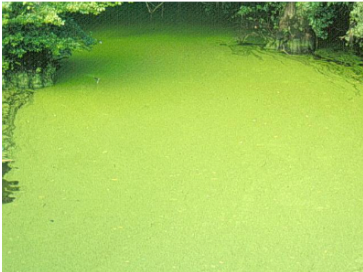
Green Algae
Commonly seen as surface mats or filamentous strands (Stringy or hair-like algae). They thrive in nutrient-rich water and are often visible during warmer months.

Blue Green Algae (cyanobacteria)
They are microscopic organisms that can form dense surface scums in still or slow-moving water. Under certain conditions, they may release compounds that affect water odor, clarity, or quality.
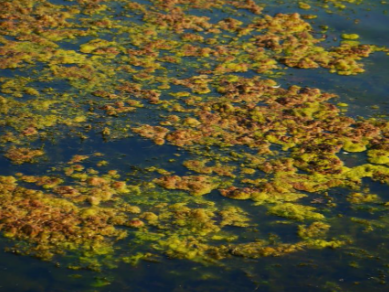
Diatoms
They tend to be more common in cooler water and may appear brownish in color. These algae are often part of early-season blooms and may settle along the bottom or attach to submerged surfaces.

Golden Algae
Can cause discoloration and, in some cases, affect aquatic life through naturally occurring compounds. These species are less common but may appear under specific environmental conditions.
Overgrowth is often tied to elevated nutrient levels, especially orthophosphate. Algae Armor is designed to bind with orthophosphate in the water column, forming insoluble particles that settle at the bottom and reduce bioavailability. This approach may assist in maintaining nutrient balance across seasons.
Understanding the types of algae present can provide insight into the underlying chemistry of a water body. For more detailed evaluation or product guidance, reach out to our technical team here.
Can You Prevent Green Overgrowth Before It Starts? Yes, Here’s How.
Waiting until green overgrowth appears on the surface of a pond or lake can lead to more intensive cleanup and repeated treatments. That is why some water stewards apply products early in the season before conditions make overgrowth more likely…
Waiting until green overgrowth appears on the surface of a pond or lake can lead to more intensive cleanup and repeated treatments. That is why some water stewards apply products early in the season before conditions make overgrowth more likely. Algae Armor can be applied proactively as part of a seasonal maintenance plan, especially in areas with recurring nutrient buildup or runoff.
Algae Armor is composed of iron oxides and zeolites. These minerals bind with orthophosphate, forming insoluble particles that settle to the bottom of the water. Once bound, the nutrients become biologically unavailable. The product’s silicate-based enhancement broadens its effective pH range (5.5 to 10) and helps stabilize particles in a variety of water conditions, including areas with runoff or flow. For early-season application, this process may help address nutrients before they become available to support green overgrowth.
Applying early may help prepare lakes and ponds for seasonal factors like rising temperatures or rain-driven nutrient inflows. Each dose is based on acreage, depth, and orthophosphate levels. For dosage calculations or to plan early treatment, see Algae Armor's Technical Specs or speak with our team for guidance.
Understanding Eutrophication and How Algae Armor Fights It
Eutrophication is the process by which water bodies become overly enriched with nutrients, often leading to excessive algae and plant growth. These nutrients—primarily phosphorus, can enter ponds, lakes, and reservoirs through runoff from fertilizers, stormwater, and organic matter...
Eutrophication is the process by which water bodies become overly enriched with nutrients, often leading to excessive green overgrowth and plant growth. These nutrients, primarily phosphorus, can enter ponds, lakes, and reservoirs through runoff from fertilizers, stormwater, and organic matter. Over time, this buildup can affect water clarity, oxygen levels, and the overall balance of aquatic ecosystems.
Algae Armor is designed to address the nutrient overload that drives eutrophication. It contains a mineral blend of iron oxides and zeolites that bond with nutrients in the water. Once bonded, these nutrients form insoluble particles that settle to the bottom of the water column, making them biologically unavailable. The product’s silicate-based enhancement technology broadens its effective pH range (5.5 to 10), improves the stability of the particles formed, and accelerates the binding process.
By targeting orthophosphates, the key limiting nutrient, Algae Armor can assist in improving overall water chemistry. Technical specifications show potential reductions of up to 90 to 99 percent in orthophosphates and significant improvement of water clarity. Algae Armor can also reduce oxygen demand, which may be useful in managing the water quality impacts often associated with eutrophication. For site-specific planning or technical questions, contact our team here.